Smartphones have become an essential part of daily life, supporting communication, work, entertainment, and navigation. When issues arise, timely cell phone repair can prevent minor problems from turning into costly replacements. From cracked screens to battery failures, most smartphone issues are common, predictable, and—when handled by professionals—completely fixable. Understanding these problems and how experts resolve them can help users make smarter decisions about device care and maintenance.
In this article, we explore the most frequent smartphone problems and explain how professional repair technicians diagnose and fix them efficiently and safely.
Cracked or Damaged Screens
The Problem
A cracked screen is one of the most common reasons people seek cell phone repair services. Drops, pressure, or accidental impacts can shatter glass, affect touch sensitivity, or damage the display underneath.
How Professionals Fix It
Professional technicians replace the damaged screen using precision tools and high-quality replacement parts. The process includes:
Safely disassembling the device
Removing the broken display without harming internal components
Installing a calibrated replacement screen
Testing touch response, brightness, and display accuracy
Unlike DIY kits, professional repairs ensure proper sealing and long-term durability.
Fast Battery Drain or Battery Failure
The Problem
If your phone struggles to hold a charge, shuts down unexpectedly, or overheats, the battery is likely degraded. Battery performance naturally declines over time due to repeated charging cycles.
How Professionals Fix It
Certified repair specialists:
Test battery health using diagnostic software
Replace worn batteries with compatible, high-capacity units
Inspect charging circuits to rule out secondary issues
A professional battery replacement restores performance while maintaining device safety.
Charging Port Issues
The Problem
Phones that charge intermittently or not at all often suffer from charging port problems. Dust buildup, moisture exposure, or worn connectors are common causes.
How Professionals Fix It
Technicians begin with a detailed inspection. Solutions may include:
Deep cleaning the port with specialized tools
Repairing or replacing the charging connector
Testing power flow and charging stability
This approach avoids unnecessary battery replacement and ensures accurate repair.
Water and Liquid Damage
The Problem
Water exposure can cause corrosion, short circuits, and component failure. Even small amounts of moisture can lead to long-term damage if untreated.
How Professionals Fix It
Professional cell phone repair centers:
Disassemble the device immediately
Clean internal components using ultrasonic equipment
Replace damaged parts
Test functionality before reassembly
Quick professional intervention significantly improves recovery chances.
Overheating and Performance Slowdowns
The Problem
Excessive heat, lagging apps, or frequent crashes often indicate internal stress, background software issues, or failing components.
How Professionals Fix It
Experts diagnose both hardware and software factors:
Removing unnecessary background processes
Updating firmware
Checking thermal components
Replacing faulty internal parts if needed
This holistic approach restores smooth performance and prevents future damage.
Speaker and Microphone Problems
The Problem
Muffled sound, low volume, or non-functioning microphones can disrupt calls and media playback. Dirt, moisture, or internal wear are usually responsible.
How Professionals Fix It
Repair technicians:
Clean or replace speaker and microphone modules
Test audio clarity and volume levels
Ensure seals are restored to prevent future issues
Professional repairs maintain sound quality without risking internal damage.
Camera Malfunctions
The Problem
Blurry images, camera app crashes, or black screens are common camera-related complaints. These issues may stem from hardware damage or software conflicts.
How Professionals Fix It
Technicians assess:
Lens and sensor condition
Camera connections
Software stability
Depending on the diagnosis, they recalibrate, repair, or replace camera components.
Software Errors and System Crashes
The Problem
Phones freezing, rebooting, or failing to update are often affected by corrupted software, incompatible apps, or storage issues.
How Professionals Fix It
Professional services include:
System diagnostics
Safe data backups
OS repairs or reinstalls
Malware removal
This ensures data safety while restoring device stability.
Buttons and Touch Sensitivity Issues
The Problem
Unresponsive power or volume buttons and inconsistent touch input can severely limit usability.
Attempting DIY fixes can lead to further damage, void warranties, or compromise device safety. Professional repair services offer:
Certified technicians
Proper tools and diagnostics
Quality replacement parts
Warranty-backed repairs
Choosing professional cell phone repair extends device lifespan, preserves performance, and protects your investment.
Final Thoughts
Smartphone problems are inevitable, but replacement isn’t always necessary. From cracked screens to battery failures, most issues are efficiently resolved through professional cell phone repair services. Understanding common problems—and how experts fix them—helps users act quickly, save money, and keep their devices performing reliably.
When your smartphone shows signs of trouble, timely professional repair is the smartest solution.
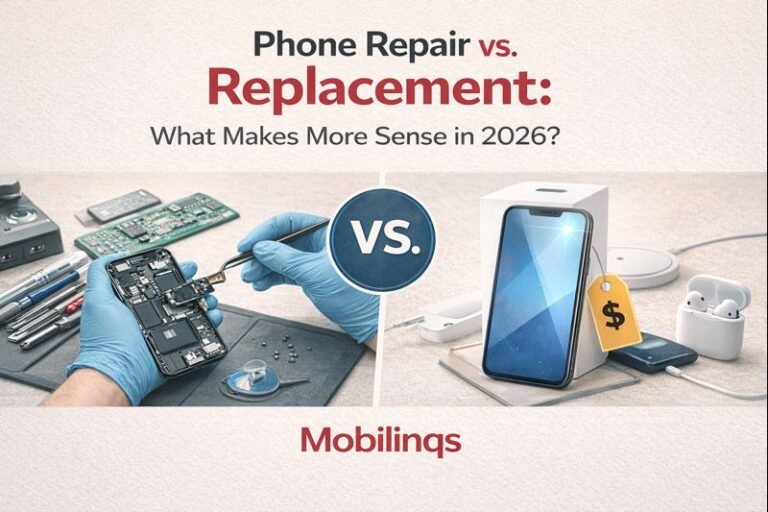
Smartphones have become essential to everyday life, handling everything from communication and payments to work and entertainment. As devices become more powerful—and more expensive—the decision between phone repair and replacement is no longer straightforward. In 2026, understanding whether your phone is worth repairing requires a careful cost-benefit analysis that considers performance, lifespan, environmental impact, and real-world usage.
This guide helps you make an informed decision by breaking down the true costs and long-term value of cell phone repair versus replacement.
Why This Question Matters More in 2026
In recent years, smartphone prices have continued to rise, with flagship devices costing significantly more than they did just a few years ago. At the same time, modern phones are built to last longer, receiving extended software updates and improved hardware durability.
This shift means that repairing a phone is often more financially sensible than replacing it—especially when the damage is limited to specific components like screens, batteries, or charging ports.
The True Cost of Replacing a Phone
Replacing a smartphone involves more than just the sticker price. Many users overlook hidden expenses, including:
Data transfer and setup time
Accessories such as cases, chargers, and screen protectors
Learning curves for new features or interfaces
Environmental costs from electronic waste
In 2026, replacing a phone can easily become a disruptive and expensive decision, particularly if the existing device still meets your daily needs.
When Phone Repair Makes Financial Sense
Phone repair is often the smarter option when:
The device is less than 3–4 years old
Damage is limited to common components (screen, battery, speaker, charging port)
Performance issues are caused by wear rather than hardware failure
Repair costs are significantly lower than replacement
Professional repairs can restore performance and usability without forcing you into an unnecessary upgrade.
Understanding Repair Costs vs. Device Value
A simple rule many experts use is the 50% guideline: If the repair cost is less than 50% of the price of a comparable replacement phone, repair is usually the better choice.
For example:
A battery replacement costs far less than buying a new device
Screen repairs often extend a phone’s life by several years
Charging or connectivity issues are typically inexpensive to fix
When done professionally, repairs maintain device reliability and preserve resale value.
Performance and Longevity After Repair
One common misconception is that a repaired phone will never perform like it used to. In reality, quality repairs using proper parts can restore:
Battery efficiency
Screen responsiveness
Audio clarity
Charging stability
In many cases, users report their phone feels “new again” after repair—especially when multiple small issues are addressed at once.
Environmental Impact: Repair vs. Replacement
Sustainability is a major consideration in 2026. Repairing your phone:
Reduces electronic waste
Conserves raw materials used in manufacturing
Lowers carbon emissions tied to production and shipping
Choosing repair over replacement is not only cost-effective but also environmentally responsible.
When Replacement Is the Better Option
There are situations where replacing your phone makes more sense:
Severe motherboard or water damage
Repeated major failures within a short time
No longer receiving essential software or security updates
Repair costs exceed the value of the device
A professional diagnostic is crucial to determine whether replacement is truly necessary.
Why Professional Diagnostics Matter
Before making a decision, always seek a professional assessment. Experienced technicians can:
Identify underlying issues
Prevent unnecessary repairs
Provide transparent cost comparisons
Recommend the most practical solution
This ensures you spend money wisely and avoid short-term fixes that lead to long-term problems.
Final Verdict: Repair or Replace?
In 2026, phone repair is often the smarter, more economical choice—especially for devices that are still modern and functional. With rising replacement costs and improved repair quality, fixing your phone can extend its lifespan by years while saving you money and reducing waste.
The key is choosing a trusted repair provider who offers honest advice, quality parts, and thorough testing.
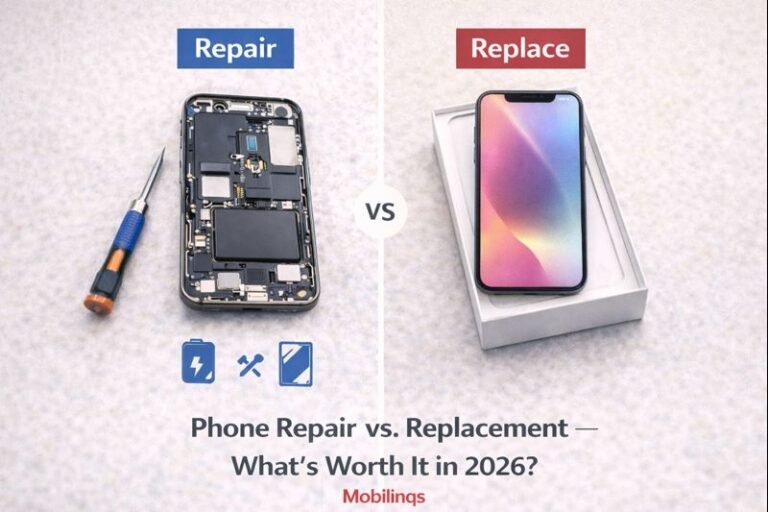
Phone Repair vs. Replacement is one of the most common questions smartphone users ask in 2026. With rising device prices, rapid software updates, and growing awareness around sustainability, deciding whether to repair a phone or replace it entirely is no longer a simple choice. A cracked screen, weak battery, or charging issue may look like a reason to upgrade—but in many cases, professional repair can extend your phone’s life by years at a fraction of the cost. This article breaks down the decision using cost, performance, environmental impact, and real-world use cases to help you choose wisely.
Understanding the True Cost of Replacing a Phone in 2026
Smartphone prices in 2026 continue to increase, especially for flagship models. Beyond the retail price, replacement comes with hidden costs:
Accessories such as cases, chargers, and adapters
Time spent setting up the device
Data transfer and app reconfiguration
Loss of resale value on the old phone
From a cost perspective, replacing a phone is often 3–5 times more expensive than repairing common issues like screens or batteries.
When Phone Repair Is the Smarter Choice
In the Phone Repair vs. Replacement debate, repair is usually the better option when the phone has minor or moderate issues and still meets your performance needs.
Common Issues That Are Cost-Effective to Repair
Cracked or shattered screens
Battery draining quickly
Charging port issues
Speaker or microphone problems
Software glitches or performance lag
Professional repairs restore functionality while preserving your existing data and settings. Most repairs can be completed the same day, minimizing downtime.
When Replacement Makes More Sense
There are scenarios where replacement may be the better decision:
Severe motherboard or logic board damage
Extensive water damage causing corrosion
Devices no longer supported by security updates
Repair costs exceeding 60–70% of the phone’s value
In these cases, investing in a new device may provide better long-term value.
Cost Comparison: Repair vs. Replacement
Issue
Average Repair Cost
Replacement Cost
Screen replacement
Low to moderate
High
Battery replacement
Low
High
Charging issue
Low
High
Water damage (minor)
Moderate
Very high
This comparison highlights why Phone Repair vs. Replacement often favors repair for everyday problems.
Environmental Impact: Why Repairing Is the Greener Option
From an environmental perspective, phone repair significantly reduces electronic waste. Manufacturing new smartphones consumes raw materials, energy, and water while generating carbon emissions. Repairing a device extends its lifecycle and supports sustainable technology practices.
In 2026, consumers and businesses alike are prioritizing eco-friendly decisions, making phone repair an environmentally responsible choice.
Performance After Repair: What Can You Expect?
Many users worry that a repaired phone won’t perform well. When repairs are done by certified technicians using quality parts, performance is often restored to near-original levels.
Battery replacements improve speed and reliability, while screen and charging repairs restore usability without affecting internal performance. Professional diagnostics ensure no underlying issues remain.
How Long Can a Repaired Phone Last?
A professionally repaired phone can last 2–4 additional years, depending on usage and maintenance. Factors that influence longevity include:
Quality of replacement parts
Software updates
Proper charging habits
Protection from heat and moisture
This makes repair a strong contender in the Phone Repair vs. Replacement decision.
How to Decide: Key Questions to Ask Yourself
Ask these questions before making a decision:
Is the phone less than 4 years old?
Does it still meet my daily usage needs?
Is the repair cost reasonable compared to replacement?
Is the issue isolated or recurring?
If most answers favor repair, replacement may not be necessary.
Why Professional Repair Services Matter
DIY repairs or unverified shops often lead to further damage, voided warranties, or data loss. Professional repair services offer:
Accurate diagnostics
Certified tools and technicians
Warranty on parts and labor
Data privacy and security
This ensures long-term reliability and protects your investment.
Phone Repair vs. Replacement: Final Verdict for 2026
In 2026, Phone Repair vs. Replacement is no longer just about fixing a broken device—it’s about making a smart financial, practical, and environmental decision. For most common issues, professional phone repair offers better value, faster turnaround, and reduced environmental impact. Replacement should be reserved for cases where repair is no longer cost-effective or viable.
Frequently Asked Questions
Is it better to repair or replace a phone in 2026?
In most cases, repairing a phone is more cost-effective and environmentally friendly than replacing it.
How much does phone repair save compared to replacement?
Repairing common issues can save up to 70% compared to buying a new phone.
Does phone repair affect performance?
When done professionally, repairs restore performance without long-term issues.
The transfer of data from tablet to phone has become a common need as users upgrade devices, switch platforms, or simply want access to the same files across multiple devices. Whether you’re moving photos, videos, contacts, documents, or apps, transferring data efficiently ensures nothing important is lost. Read more
Using mobile devices in extreme climates is becoming a growing challenge for tech users around the world. In hot regions, the use of phone and tablets requires extra care due to the risks of overheating, battery damage, screen malfunction, and potential performance issues. Read more
Smartphones and tablets have become essential tools in daily life, supporting communication, work, entertainment, and productivity. However, frequent usage, accidental damage, and environmental factors often lead to performance issues and hardware failures. Read more